
nPro automatically generates fully formatted project reports, BEW feasibility studies and potential analyses in Word format, ready to be used straight away.
| Export | Contents |
|---|---|
| Detailed report | Comprehensive project report with variant comparison, figures, tables and explanatory text (sample report: detailed project report) |
| Summary report | Condensed version of the project report with variant comparison, figures and tables (sample report: summary report) |
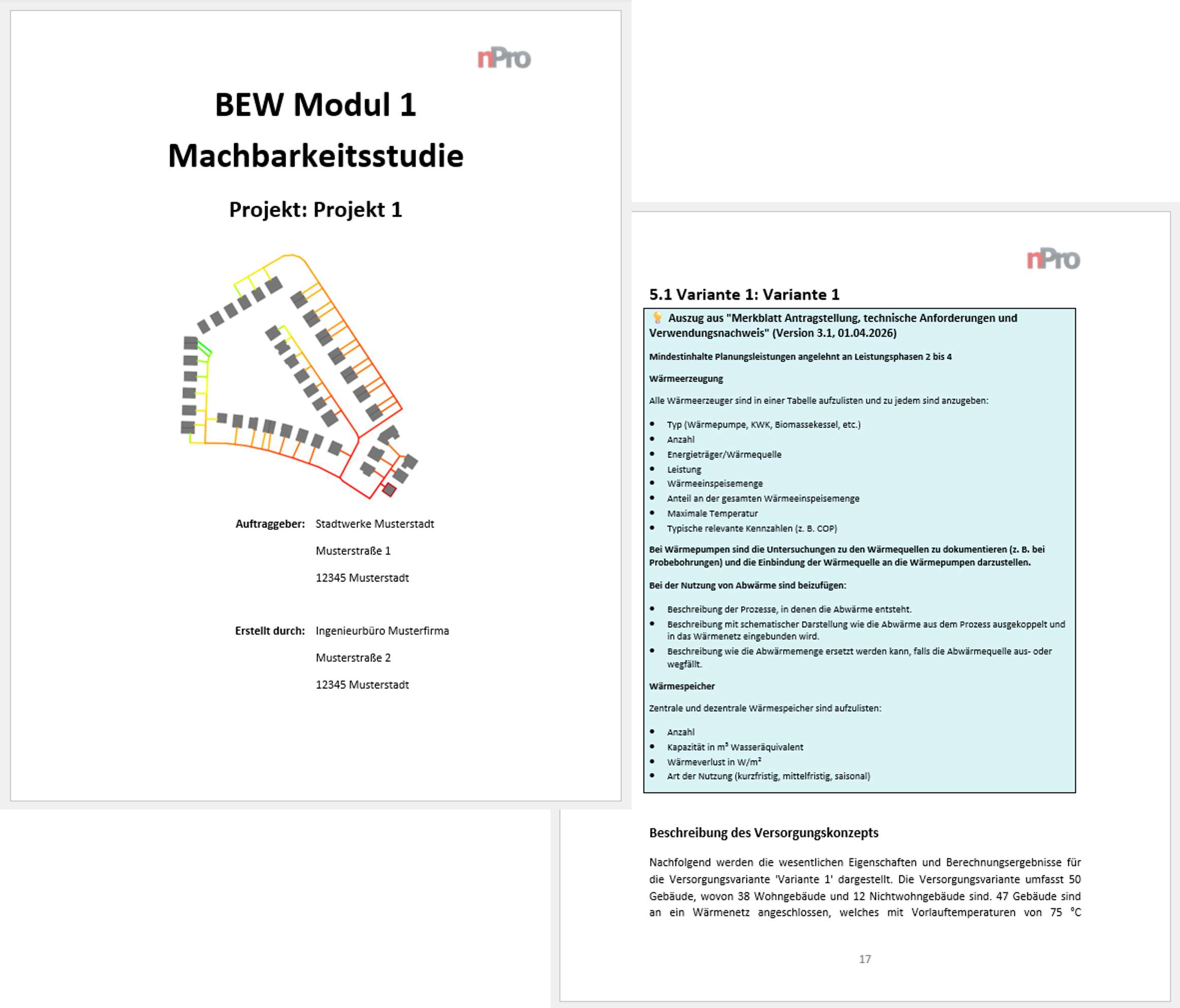
| BEW feasibility study (module 1) | Draft feasibility study for your project in line with BEW module 1, including placeholders and based on the funding guideline and the official information sheet. Available in German only, as BEW is a German funding programme (sample report: BEW feasibility study module 1) |
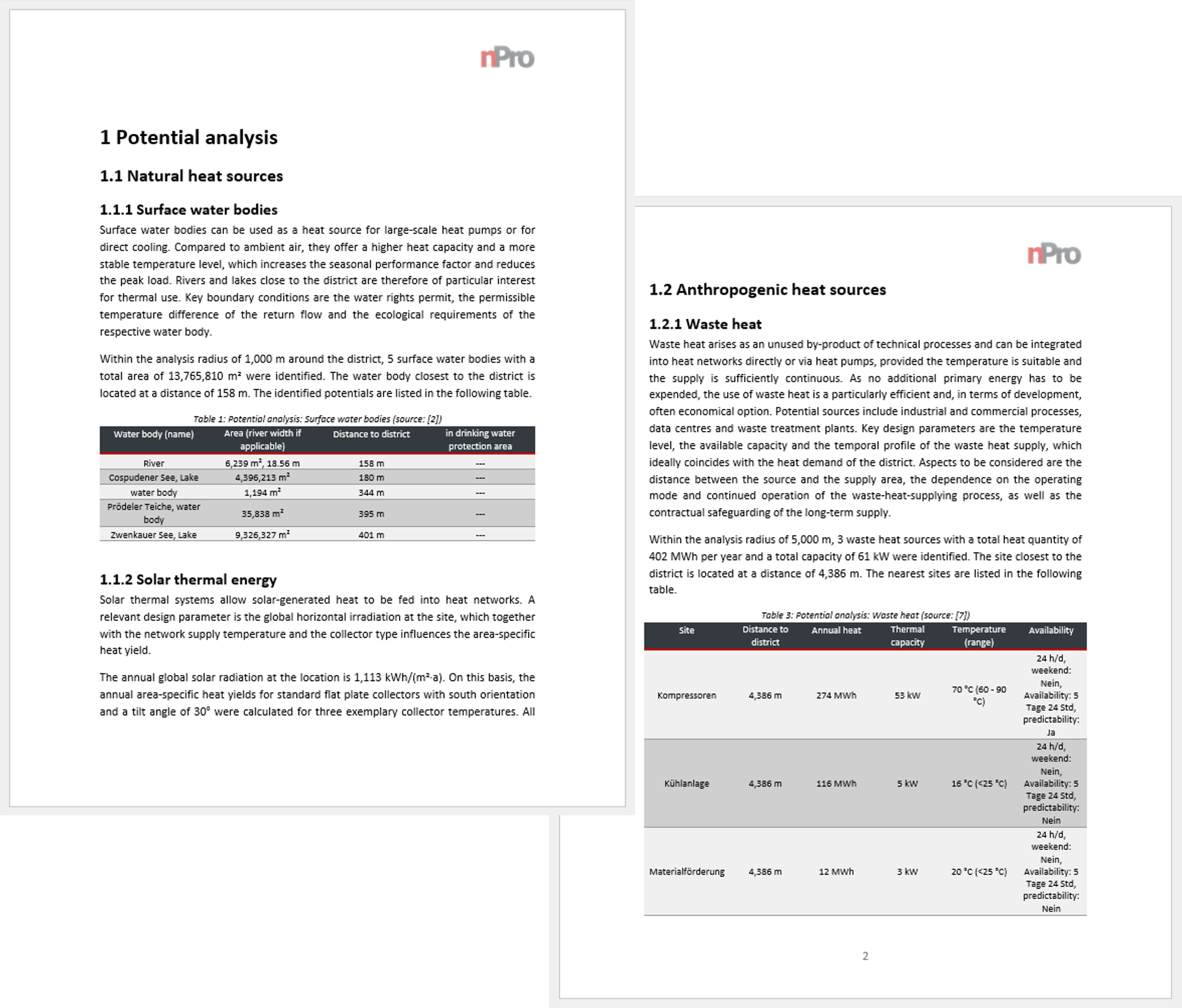
| Potential analysis | Results of the potential analysis for renewable heat and power generation in report format (sample report: potential analysis) |
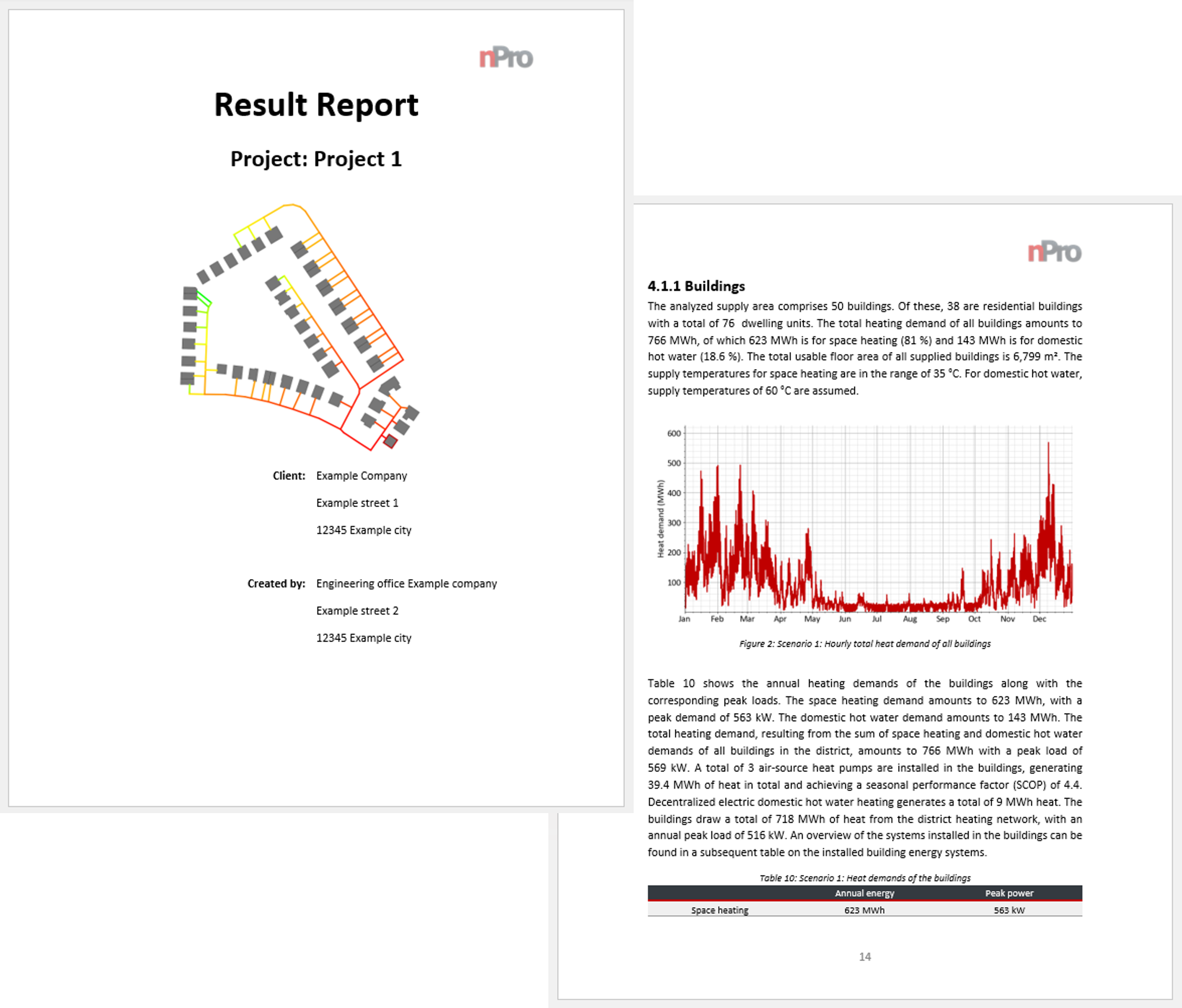
Detailed report
The detailed report is the complete project report, from the introduction to the appendix. Alongside all figures and tables, it contains fully formulated text that explains the results using your actual project figures: demands, network design, energy hub, economic performance and potentials are described for each variant and then set side by side in the variant comparison. The cover page and the tables of contents, tables and figures are already in place. The appendix documents all input parameters and the calculation methodology applied, making the results fully traceable.
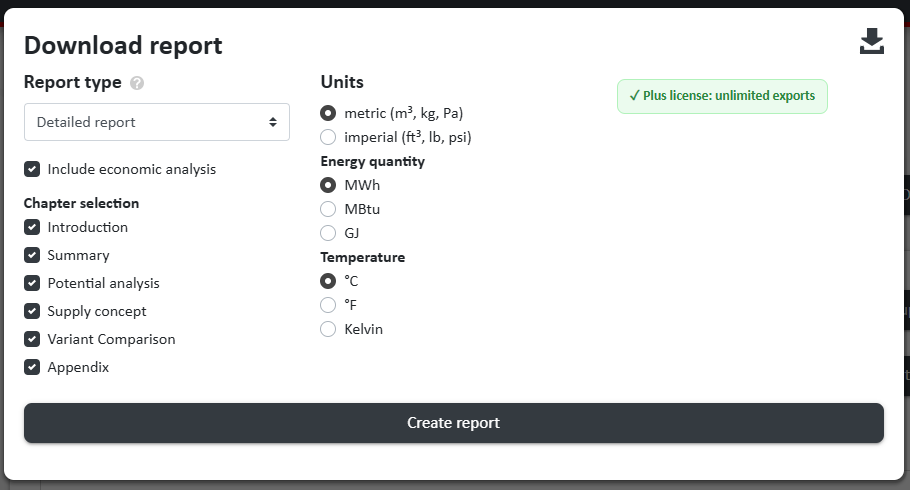
The scope of the report can be defined before the export: the chapter selection determines which chapters appear in the document, from the introduction and summary through the potential analysis, supply concept and variant comparison to the appendix. This produces either the full report or an extract limited to selected topics. In addition, the economic analysis can be excluded, for example when costs and funding assumptions have not yet been agreed or the report is to be passed on without economic details. All economic chapters, tables and figures are then omitted.
The result is an editable Word document that can be passed on directly or used as the basis for your own report. (sample report: detailed project report)
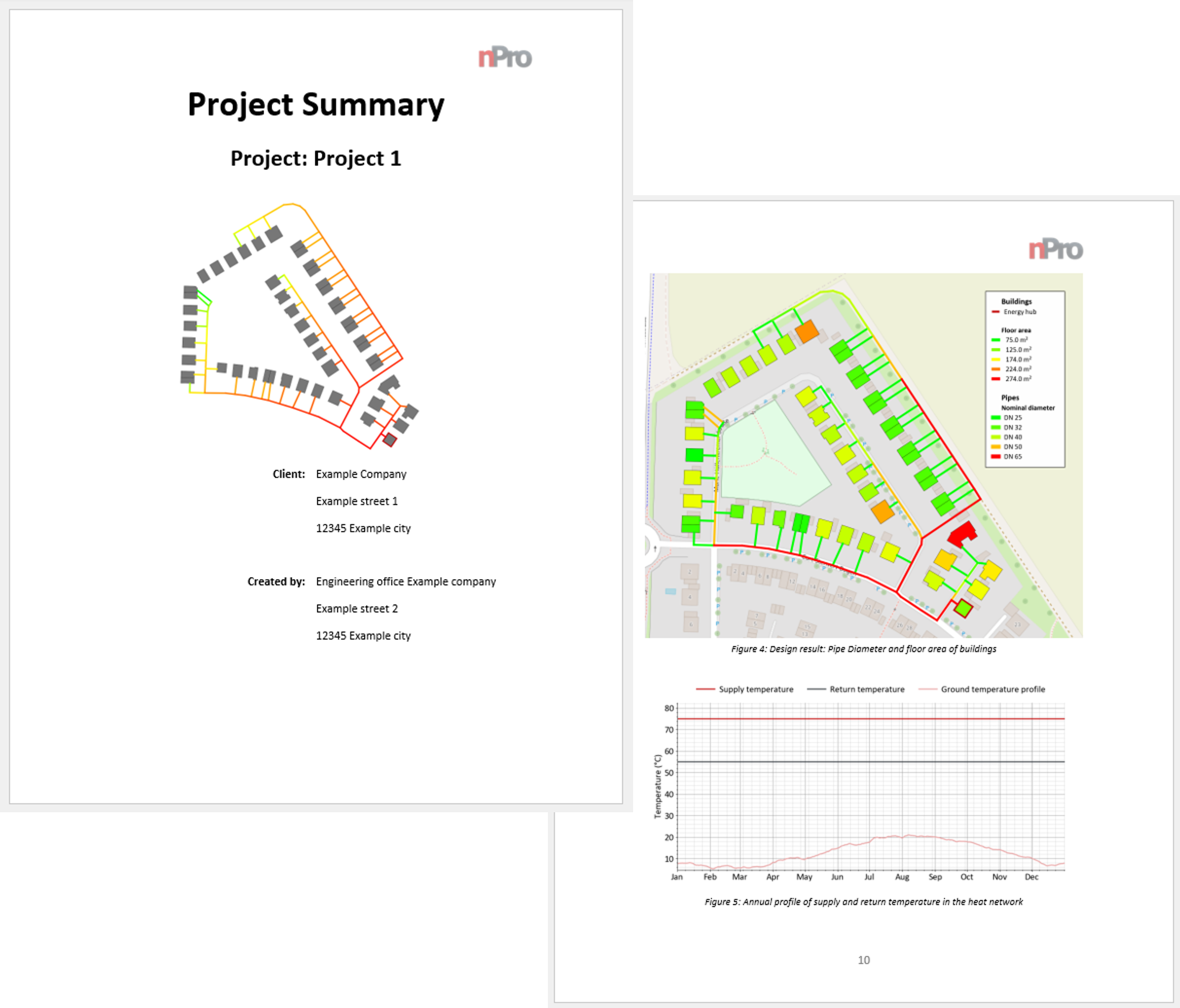
Summary report
The summary report contains the same results in compact form: all figures and result tables on buildings, heating network, energy hub and economic performance, as well as the complete variant comparison, but without the detailed explanatory text. It is suited to interim results, internal coordination and the quick presentation of variants. The appendix with all input parameters is retained. (sample report: summary report)
BEW feasibility study (module 1)
This export provides a draft feasibility study in line with BEW module 1. The structure follows the minimum contents of the funding guideline and the BAFA information sheet, from the actual-state analysis of the study area through the assessment of renewable energy and waste heat potentials to the variant comparison. Every chapter that can be derived from the project is already filled in: building structure with overview map, potential analysis, supply variants including economic performance, and the complete appendix. For the chapters that still need to be added, such as the target-state analysis, instrumentation and control technology, permitting feasibility, schedule, pathway to greenhouse gas neutrality or citizen engagement, the document provides placeholders with the relevant extract from the information sheet at the appropriate points. While writing, it is therefore immediately clear what is expected at each point. (sample report: BEW feasibility study module 1)
Potential analysis
The potential analysis report presents the results of the potential analysis for renewable heat and power generation in a compact report format. It covers land use, natural heat sources (surface water bodies, solar thermal energy, shallow and deep geothermal energy), anthropogenic sources (waste heat, wastewater treatment plants, existing heating networks), biogenic fuels and renewable power generation in the surrounding area. For each category, the report provides a brief technical assessment and a table of the specific potentials, including the distance to the district, capacity or area, and relevant constraints such as water protection areas. (sample report: potential analysis)