System COP: Calculation and meaning
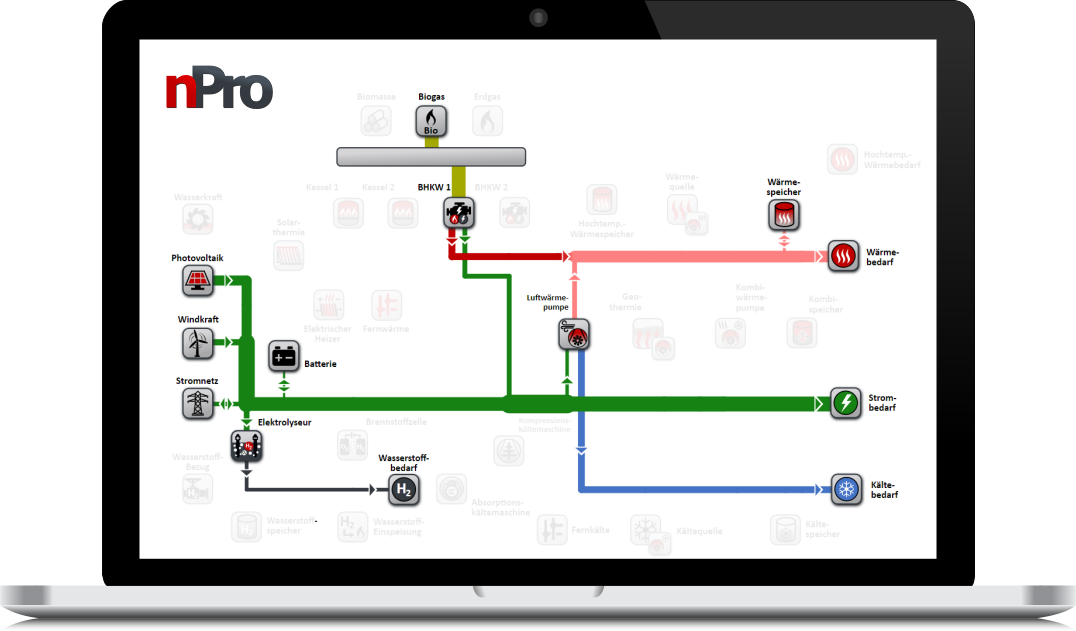
The system COP describes the efficiency of the entire heat supply system. It relates the total heat demand covered by the system to the net amount of electricity supplied to the overall system. Unlike the COP of an individual heat pump, the system COP considers all electrical generators and consumers within the system under consideration.
How is the system COP calculated?
The system COP is calculated from the total heat demand and the net electricity consumption of the system:
The net electricity consumption is calculated as the sum of electricity imported from the grid and electricity generated within the system, minus the electricity exported to the public electricity grid:
The calculation can therefore be expressed in simplified form as follows:
Which electricity flows are considered?
The electricity import includes both the regular electricity imported from the grid and any additional direct electricity imports from the public electricity grid.
Electricity generated within the system includes, where the corresponding technologies are installed:
- photovoltaic systems,
- wind turbines,
- hydropower plants,
- photovoltaic-thermal collectors (PVT),
- combined heat and power units, and
- fuel cells.
All electricity exported to the public electricity grid is deducted from this amount. This includes both the general grid feed-in and direct electricity exports from individual technologies.
When is the system COP displayed?
The system COP is only displayed if the heat and cooling supply is based exclusively on electrical energy. Consequently, no other energy carriers or grid-based forms of energy may be imported from outside the system.
The indicator is not displayed if at least one of the following energy imports is present:
- natural gas,
- biogas,
- biomass,
- hydrogen,
- district heating, or
- district cooling.
In such cases, a system COP based solely on electricity consumption would not be meaningful, as part of the heat or cooling supply is provided by other energy carriers.
Difference from the COP of a heat pump
The COP of an individual heat pump describes the ratio between the heat supplied by that heat pump and its electricity consumption. The system COP, by contrast, considers the entire supply system.
Interpreting the result
A system COP of 3.5, for example, means that a total of 3.5 kilowatt-hours of heat demand is covered for each kilowatt-hour of net electricity used. In general, a higher system COP indicates a more efficient use of the electrical energy supplied to the system.
When interpreting the result, it should be noted that the system COP is influenced by the selected system boundary, the technologies used, local electricity generation, and the amount of electricity exported to the grid. It should therefore primarily be used to compare different variants of the same project.
 English
 Deutsch